
OUR APPROACH
Organizational Intelligence
Your organization and culture, measured and mapped.
The visibility to put every team member in the position to have the greatest impact on their students and colleagues.
Educators are overwhelmed. Put them in a position to thrive.
Educators are facing a multitude of challenges. Funding uncertainty. A myriad of technology tools. The more diverse and intense needs of students in their classrooms. Nobody can tackle these challenges alone. Build the human connections that strengthen the resilience, alignment, and power of your educators.
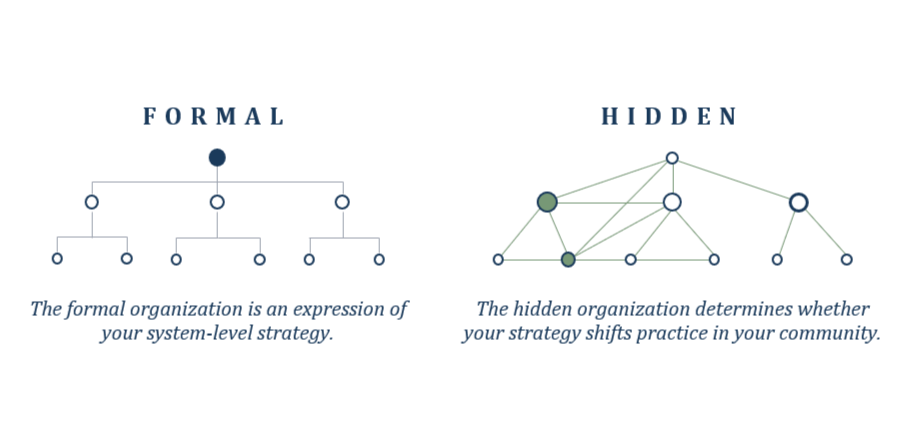
We help superintendents see and design the two organizations that exist within their school system:
The formal organization is an expression of the district's strategy and is made up of reporting lines, curricula, budget, and board priorities.
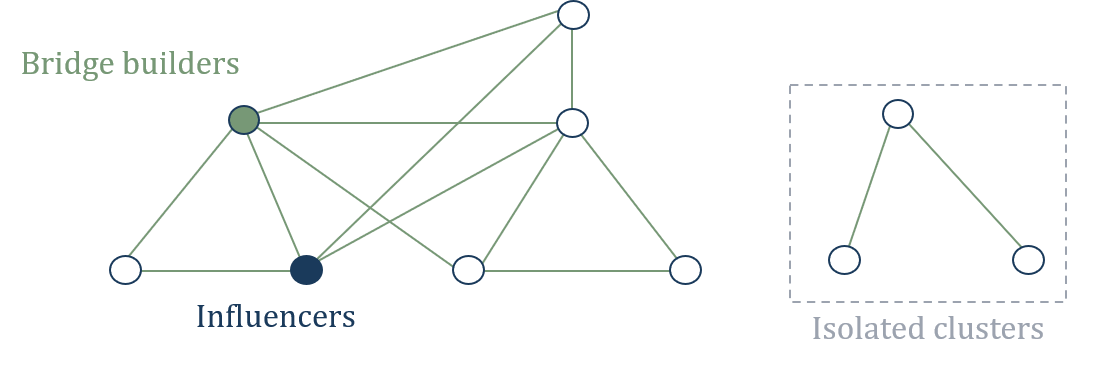
The hidden organization is the complex web of relationships that shape perceptions and practices in classrooms across the district.
WATCH THE OVERVIEW
See how it works in under three minutes.
COMPONENT ONE · DESIGN THE SYSTEM
The formal organization
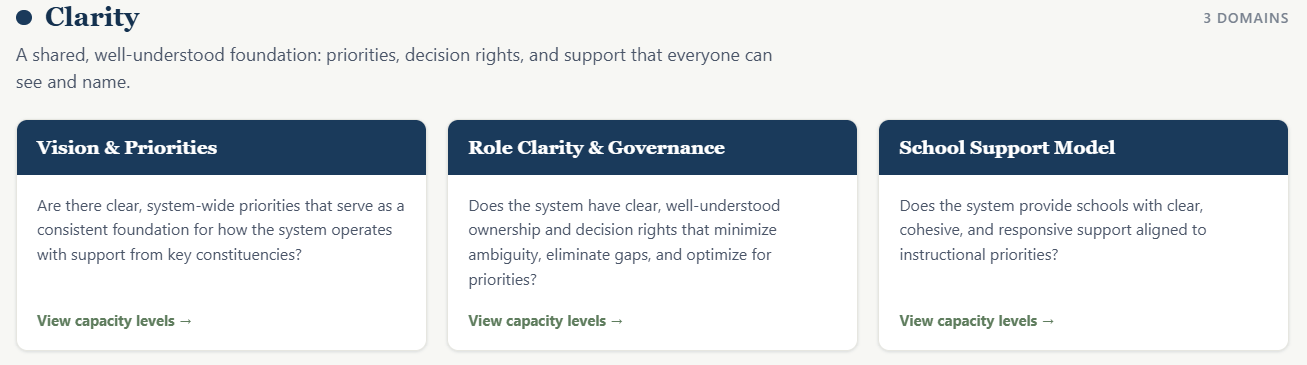
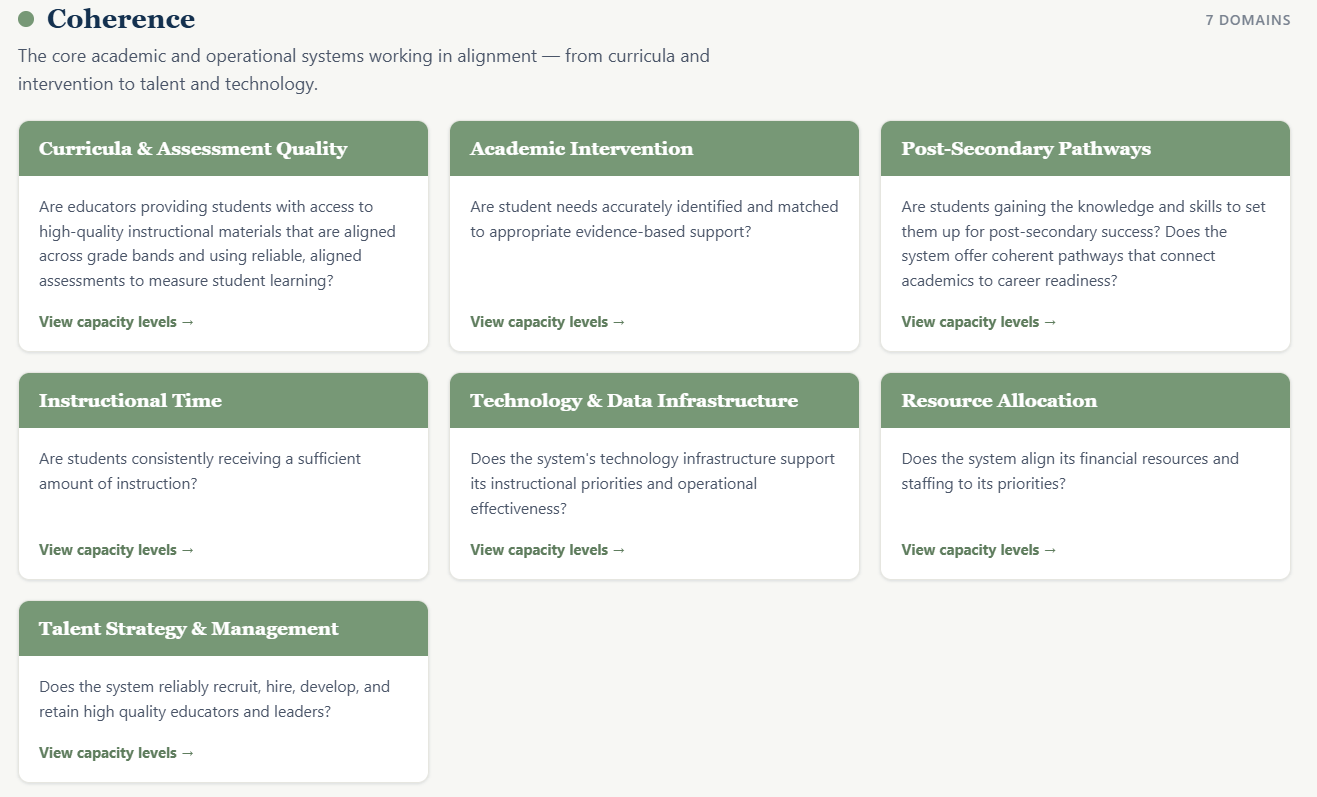
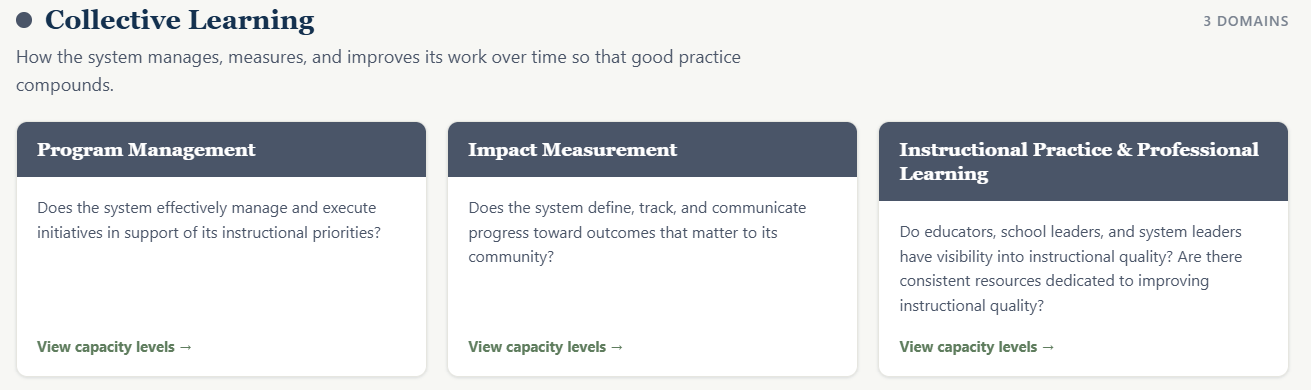
How the district is structured, staffed, resourced, and managed, rated against LearnScope’s research-backed School System Capacity Model.
Inputs
District data you already have
Peer benchmarks
A short staff survey
Interviews and focus groups
Outputs
You receive a Capacity Profile, including a rating for each domain, the evidence behind it, and a clear plan to strengthen how your system runs. Bring this to your cabinet to calibrate on strengths, priorities, and areas to invest in.
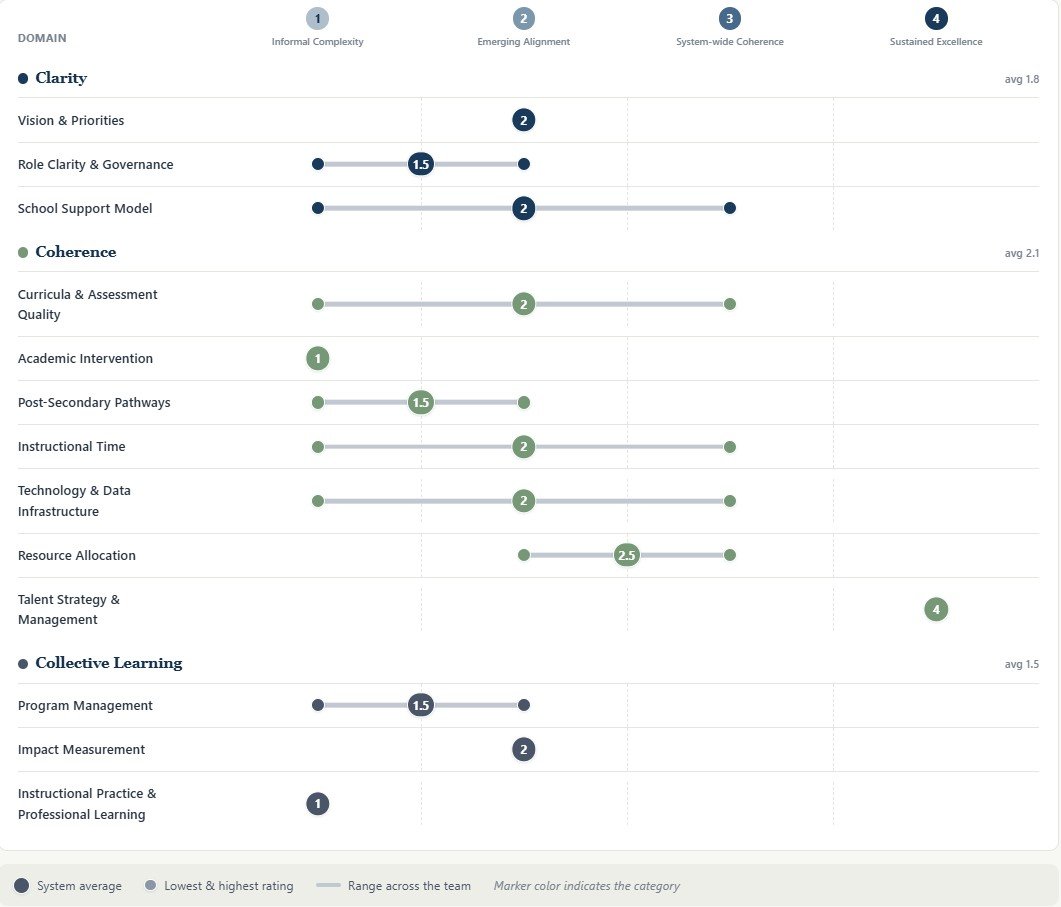
Sample results from a leadership team survey, including the system average and range of ratings for each domain. Illustrative data.
ALIGNMENT & ACTION
The Leadership Lab
A full-day working session for up to five leaders. Each step produces a deliverable, and together they form an actionable roadmap you can share with the board and use to guide implementation efforts.

TAILORED SUPPORT
As much support as your district needs.
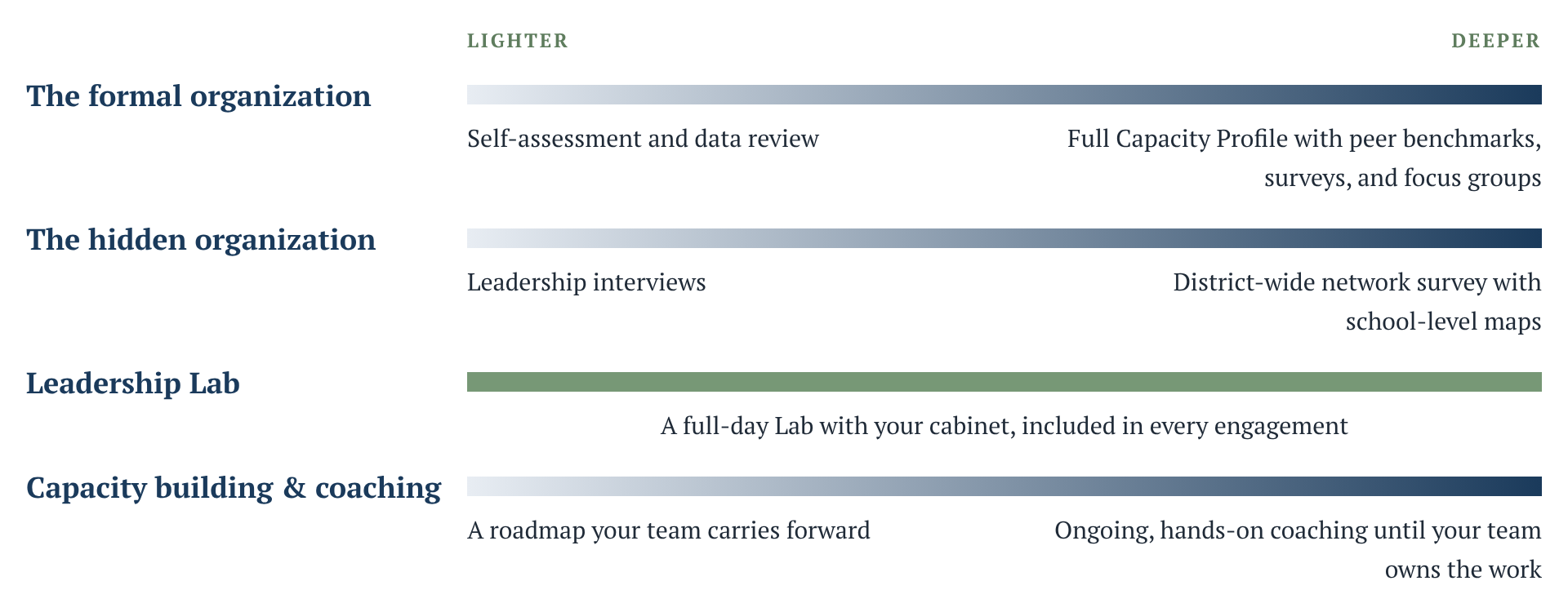
We tailor every engagement to your community's needs by adjusting the depth of support across each part of our work.
RESEARCH BASE
Why it matters.
District leadership quality is among the strongest levers on student outcomes. Leaders move outcomes by helping districts focus and operate better.
Stemper, Harvard; Lavy, Rachkovski and Boiko, 2023
Trust and advice relationships determine whether practices spread between schools, and district policy shapes those networks.
Daly and Finnigan; Coburn and Russell
Trust among educators is a key driver of student and educator outcomes. High-trust schools were three times more likely to improve in reading and math.
Bryk and Schneider, Trust in Schools, 2002
Start with a conversation.
Thirty minutes, off the record.