
See your school system clearly and lead with confidence.

LearnScope gives incoming superintendents a research-backed picture of how their district actually operates so they can start building for the future within the first few months, not the first few years.
Your runway is short. Make it count.
Declining enrollment. Funding uncertainty. Stagnant student outcomes. Whatever challenges are facing your community, you are on the clock to show impact from day one. High-stakes decisions on your budget, your staffing model, and your instructional system arrive earlier than ever with real community pressure to get them right.
You should not have to choose between moving with urgency and building buy-in. But how do you learn the systems, structures, and culture of a school system without the luxury of an extended listening tour?
The hidden organization, made visible.
Most superintendents need 12 months or more to learn how their district actually operates. Understanding who influences perceptions and practices, which schools feel connected to central office, and which groups feel overlooked. Our hidden organization analysis delivers that picture in just a few months. Watch how it works.
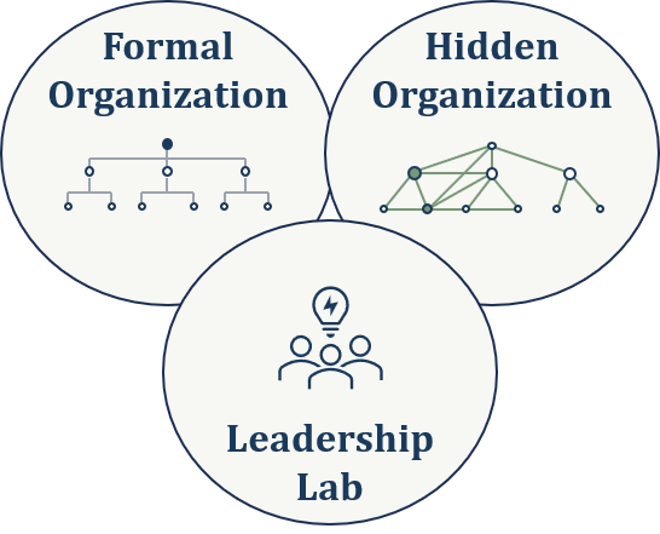
Three components create one board-ready transition plan.
Formal Organization
A research-backed diagnostic of the district’s systems and structures, including instructional time, curricula, resource allocation, and continuous improvement processes, measured against the thirteen domains of our proprietary School System Capacity Model.
Hidden Organization
A short staff survey, analyzed with network science tools, maps the complex web of relationships built over decades in your district. See how instructional support, trust, and information travel to uncover the influencers, the bridge builders, and those who are receiving less support.
Leadership Lab
A facilitated, full-day working session that translates the findings into an actionable transition plan. Clarify priorities, define your personalized leadership profile, design a stakeholder engagement strategy, and build a transition roadmap to share with your community.
Start at the depth your school system needs.
-
OrgScope Diagnostic
The complete diagnostic, including a data-driven formal organization capacity assessment, the hidden organization map, and the Leadership Lab.
12-16 weeks -
Hidden Org Map
The organization map and the Leadership Lab. See the network your instructional strategy will travel through, assess your system’s change readiness, and plan accordingly.
8-12 weeks
-
Leadership Lab
Focused pre-work, including interviews, data review, and a leadership assessment, followed by a full-day Lab. You leave with a board-ready plan.
3-4 weeks
Built for your first year in the leadership seat.
We work with superintendents in their first year leading a school system, either first-time superintendents or veterans stepping into an unfamiliar system. Whether you start in July or you are six months in and still unpacking the idiosyncrasies of your new system, we can help accelerate your time-to-impact.